
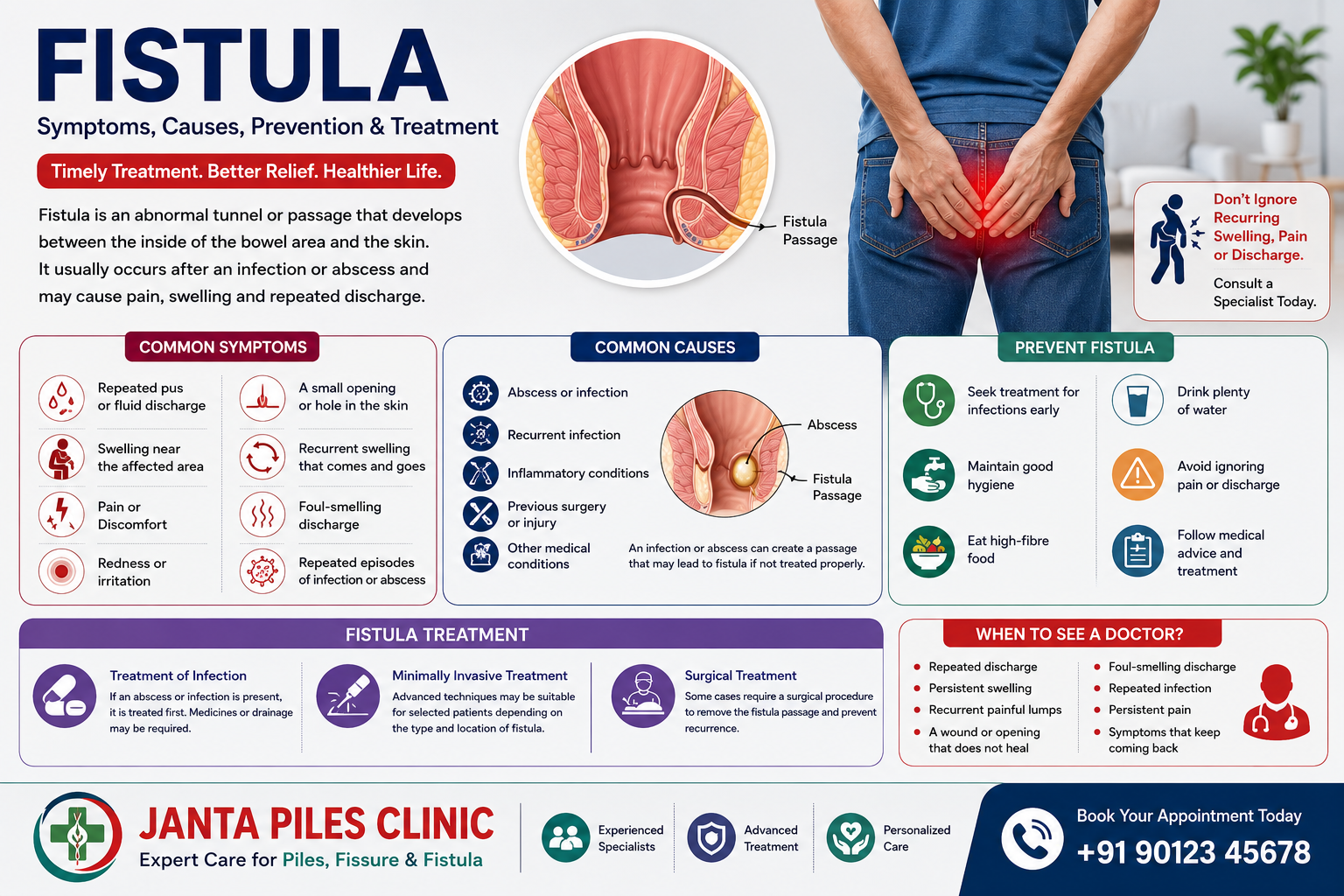
Fistula is a condition in which an abnormal tunnel or passage develops between the inside of the bowel area and the surrounding skin. It can cause persistent discomfort, swelling, irritation and discharge.
Fistula usually develops after an infection or abscess in the affected area. Because the condition may not heal completely on its own, timely medical evaluation is important.
With the right diagnosis and appropriate treatment, fistula can be managed effectively.
What Is Fistula?
Fistula is an abnormal connection or tunnel that develops between two areas that normally should not be connected.
In many cases, fistula develops after an infection causes a collection of pus, commonly known as an abscess. When the infection does not heal completely, a small passage may remain between the affected area and the skin.
This passage can sometimes lead to repeated discharge, swelling or infection.
Common Symptoms of Fistula
Symptoms may vary depending on the location and severity of the fistula.
Common signs may include:
- Repeated pus or fluid discharge
- Swelling near the affected area
- Pain or discomfort
- Redness or irritation
- A small opening or hole in the skin
- Recurrent swelling that may temporarily improve after discharge
- Foul-smelling discharge
- Skin irritation around the affected area
- Repeated episodes of infection or abscess
Some people may experience symptoms that come and go. Temporary relief after discharge does not necessarily mean that the fistula has healed.
What Causes Fistula?
Fistula can develop for several reasons. One of the most common causes is an infection or abscess.
1. Abscess or Infection
A collection of pus caused by infection can sometimes create a passage through surrounding tissues. If the passage remains after the abscess drains, a fistula may develop.
2. Recurrent Infection
Repeated infections in the same area can increase the possibility of fistula formation.
3. Inflammation
Certain inflammatory conditions can affect the tissues and may contribute to fistula development.
4. Previous Surgery or Injury
In some cases, previous surgery, injury or procedures involving the affected area may contribute to the development of an abnormal passage.
5. Other Medical Conditions
Some underlying medical conditions can increase the risk of developing fistula. A doctor may recommend additional tests when symptoms are persistent, unusual or recurrent.
Fistula vs Piles vs Fissure
Fistula, piles and fissure are different conditions, although they may sometimes cause similar symptoms.
Fistula usually involves an abnormal passage and may cause repeated discharge, swelling and recurrent infection.
Piles involve swollen blood vessels and supporting tissues around the anus or lower rectum. They may cause bleeding, itching, swelling or discomfort.
Fissure involves a small tear in the delicate tissue around the anus and commonly causes sharp pain during or after passing stool.
Because symptoms can overlap, proper medical examination is important for an accurate diagnosis.
How Is Fistula Diagnosed?
A doctor may evaluate the patient’s symptoms, medical history and affected area during a clinical examination.
Depending on the symptoms and complexity of the condition, additional investigations may sometimes be recommended.
The purpose of diagnosis is to identify the location and extent of the fistula and determine whether there are any associated infections or abscesses.
An accurate diagnosis helps the doctor select the most appropriate treatment.
Can Fistula Heal on Its Own?
Unlike some minor conditions, a fistula may not completely heal on its own because an established abnormal passage can continue to remain after the original infection has improved.
Symptoms may temporarily disappear when discharge occurs, but the underlying passage may still be present.
For this reason, recurring swelling, discharge or infection should be evaluated by a qualified doctor.
Fistula Treatment
Treatment depends on the location, size, complexity and underlying cause of the fistula.
Treatment of Infection or Abscess
If an active abscess or infection is present, the doctor may first focus on controlling the infection and draining the collection when required.
Antibiotics may be recommended in selected situations according to the doctor’s assessment.
Minimally Invasive Treatment
Depending on the condition, a specialist may recommend a minimally invasive treatment approach.
Modern techniques may be suitable for selected patients and are generally chosen based on the fistula’s location and complexity.
Surgical Treatment
Some fistulas require a surgical procedure to remove or treat the abnormal passage.
The exact procedure depends on the individual case. The doctor may consider factors such as the location of the fistula, surrounding tissues and whether the condition is simple or complex.
The goal of treatment is to eliminate the fistula while protecting normal surrounding tissues.
Why Early Treatment Is Important
Ignoring repeated swelling or discharge may allow the condition to continue or cause recurrent infection.
Early medical evaluation can help:
- Identify the underlying problem
- Detect associated infection or abscess
- Understand the extent of the fistula
- Select an appropriate treatment approach
- Reduce repeated episodes of discomfort and infection
If you notice repeated discharge or swelling, it is better to seek professional advice rather than repeatedly treating the symptoms at home.
Can Fistula Be Prevented?
Not every fistula can be prevented, but maintaining good health and treating infections early may help reduce certain risks.
Helpful measures may include:
- Seek medical attention for persistent swelling or infection
- Do not ignore repeated pus or fluid discharge
- Maintain good hygiene
- Follow a healthy and balanced diet
- Drink adequate water
- Avoid self-treatment of recurring infections
- Follow medical advice after any procedure or treatment
If an abscess develops, timely medical evaluation is important because untreated or recurring infection may lead to complications.
When Should You See a Doctor?
You should seek medical evaluation if you experience:
- Repeated pus or fluid discharge
- Persistent swelling
- Recurrent painful lumps
- A small opening or wound that does not heal
- Foul-smelling discharge
- Repeated episodes of infection
- Persistent pain or discomfort
- Symptoms that improve temporarily but keep returning
Do not ignore recurring discharge or swelling. These symptoms may indicate an underlying fistula or another condition that requires professional evaluation.
Is Fistula Treatment Painful?
The level of discomfort depends on the type of treatment, the complexity of the condition and individual factors.
Doctors use appropriate medical and surgical techniques to manage discomfort and support recovery.
Your doctor can explain the expected recovery period, precautions and follow-up care based on the selected treatment.
Get the Right Fistula Treatment at the Right Time
Fistula can be a persistent and uncomfortable condition, especially when swelling, discharge or infection keeps returning.
Getting the condition evaluated at the right time can help identify the underlying problem and determine the most appropriate treatment.
At Janta Piles Clinic, patients can seek professional evaluation and guidance for conditions such as piles, fissure and fistula.
A proper diagnosis is the first step toward selecting the right treatment plan.
Do not ignore recurring swelling, discharge or pain. Consult a qualified doctor for appropriate evaluation and treatment.
Frequently Asked Questions About Fistula
What is fistula?
Fistula is an abnormal tunnel or passage that develops between two areas that normally should not be connected. It may develop after an infection or abscess.
What are the common symptoms of fistula?
Common symptoms include repeated discharge, swelling, pain, irritation, a small opening in the skin and recurrent infection.
Can fistula heal without treatment?
An established fistula may not completely heal on its own. Symptoms can sometimes temporarily improve after discharge, but the underlying passage may remain.
Is fistula the same as piles?
No. Fistula is an abnormal passage, while piles involve swollen blood vessels and supporting tissues.
Is fistula the same as fissure?
No. Fissure is a small tear in the delicate tissue, while fistula involves an abnormal tunnel or passage.
What is the best treatment for fistula?
There is no single treatment suitable for every patient. Treatment depends on the location, complexity, cause and overall condition. A qualified specialist should determine the most appropriate approach.
Can fistula come back after treatment?
Fistula can recur in some cases. The risk depends on factors such as the complexity of the condition, its location and the treatment used. Regular follow-up as advised by the doctor can be important.
When should I consult a doctor?
You should consult a qualified doctor if you have repeated discharge, swelling, pain, recurrent infection or a wound/opening that does not heal.