
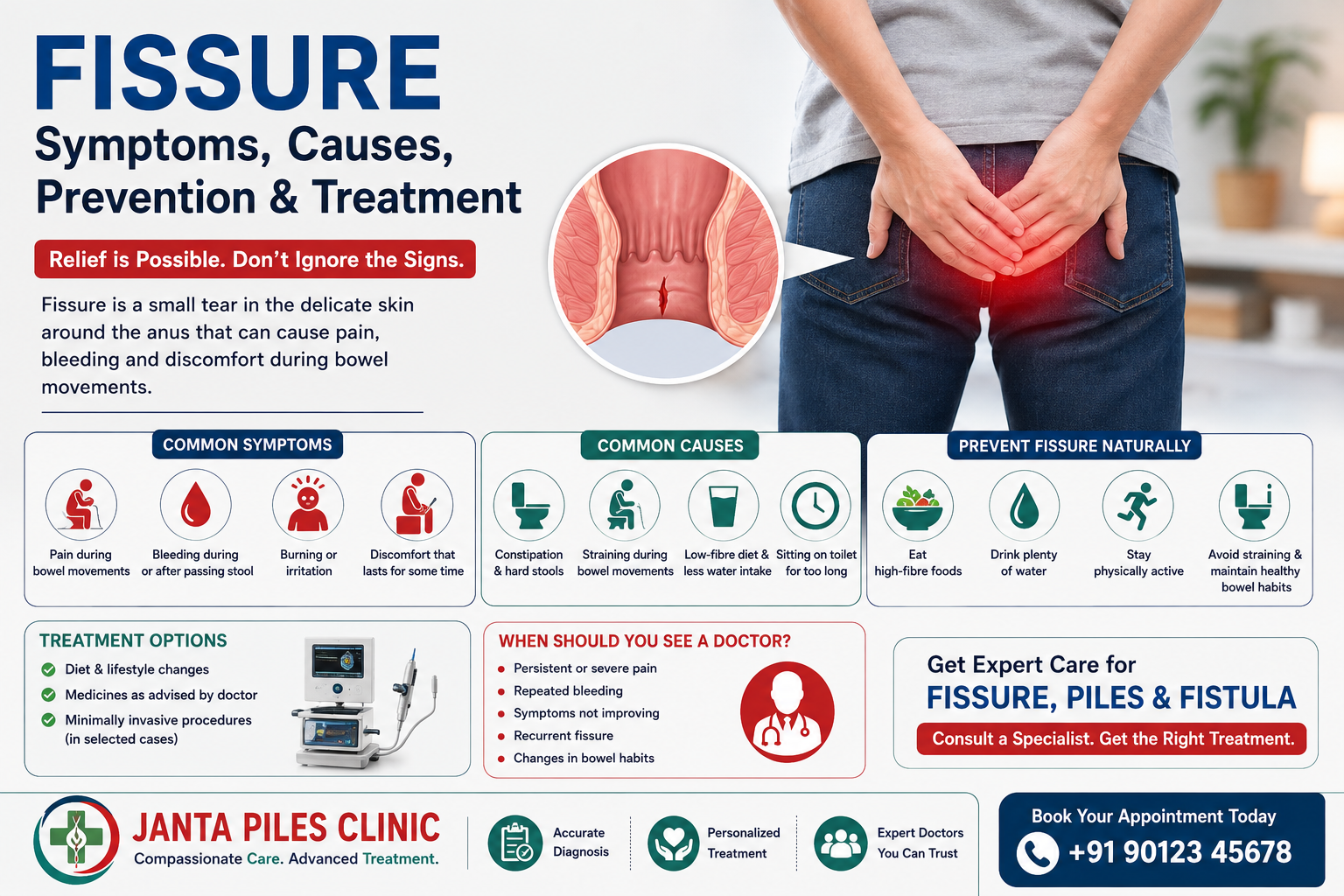
Fissure is a common condition that can cause a small tear in the delicate skin around the anus. It may lead to sharp pain, burning, irritation and bleeding, especially during or after passing stool.
Although fissure can be uncomfortable, many cases can improve with proper care and healthy bowel habits. When symptoms continue or keep coming back, consulting a qualified doctor can help identify the cause and determine the appropriate treatment.
What Is Fissure?
Fissure develops when the delicate tissue around the anus becomes injured or develops a small tear. Hard stools, constipation and excessive straining during bowel movements are common factors that can contribute to this condition.
Fissure may be temporary and heal with appropriate care. However, when it persists for a longer period or repeatedly returns, medical evaluation may be required.
Common Symptoms of Fissure
Symptoms can vary depending on the severity and duration of the condition.
Common signs include:
- Sharp pain while passing stool
- Burning or discomfort after bowel movements
- Bright-red bleeding during or after passing stool
- Itching or irritation around the affected area
- Pain that may continue for some time after using the toilet
- A small crack or tear around the affected area
- A small skin tag or lump in cases that have been present for a long time
Pain during or shortly after passing stool is one of the commonly reported symptoms of fissure.
What Causes Fissure?
Several factors can increase the risk of developing fissure.
1. Constipation
Hard and dry stools can stretch the surrounding tissue and cause a tear.
2. Excessive Straining
Repeated straining while passing stool can put additional pressure on the affected area.
3. Hard or Large Stools
Passing very hard or large stools can cause injury and contribute to fissure formation.
4. Frequent Loose Motions
Repeated diarrhoea can irritate the surrounding skin and may contribute to the development of fissure.
5. Low-Fibre Diet
A diet that does not contain enough fibre may contribute to constipation and hard stools.
6. Inadequate Water Intake
Not drinking enough fluids can contribute to harder stools and irregular bowel movements.
7. Poor Toilet Habits
Ignoring the natural urge to pass stool or spending unnecessarily long periods on the toilet may contribute to unhealthy bowel habits.
Who Can Develop Fissure?
Fissure can affect people of different age groups. The risk may be higher in people who frequently experience:
- Constipation
- Hard stools
- Excessive straining
- Frequent loose motions
- Low-fibre diet
- Insufficient fluid intake
- Irregular bowel habits
- Previous episodes of fissure
Maintaining regular and healthy bowel movements can help reduce the risk.
Fissure vs Piles
Fissure and piles are different conditions, although their symptoms may sometimes appear similar.
Fissure is generally associated with a small tear in the delicate tissue around the anus and commonly causes sharp pain during or after passing stool.
Piles, also known as hemorrhoids, involve swollen blood vessels and supporting tissues around the anus or lower rectum. They may cause bleeding, itching, swelling or discomfort.
Because bleeding and discomfort can have several possible causes, it is better to get a proper medical evaluation instead of assuming the problem is always piles or fissure.
How Can Fissure Be Prevented?
Healthy lifestyle and bowel habits can help reduce the risk of fissure.
Eat Fibre-Rich Foods
Include fruits, vegetables, whole grains, pulses and other fibre-rich foods in your daily diet. Fibre can help make stools softer and easier to pass.
Drink Enough Water
Adequate fluid intake can support healthy bowel movements and help reduce the risk of constipation.
Avoid Excessive Straining
Try not to force or strain while passing stool. Allow bowel movements to happen naturally.
Stay Physically Active
Regular physical activity can support digestion and healthy bowel function.
Follow Healthy Toilet Habits
Avoid sitting on the toilet unnecessarily long and do not ignore the natural urge to pass stool.
Fissure Treatment
Treatment depends on the severity, duration and symptoms of the condition.
Conservative Treatment
For mild or recent cases, a doctor may initially recommend measures that help improve bowel movements and reduce irritation.
These may include:
- Increasing dietary fibre
- Drinking adequate fluids
- Preventing constipation
- Avoiding excessive straining
- Maintaining healthy toilet habits
- Warm-water soaks when recommended
- Medicines prescribed by a doctor
The aim is to reduce further irritation and provide an environment that supports healing.
Medical Treatment
If symptoms continue, a doctor may recommend medicines to help manage pain, relax the muscles in the affected area or support healing.
Treatment should be selected according to the patient’s condition and medical history.
Advanced Treatment
Some long-lasting or recurring cases may not respond sufficiently to basic treatment. In such situations, a specialist may recommend a suitable minimally invasive or surgical procedure.
The right treatment depends on the patient’s individual condition, symptoms and medical examination.
When Should You See a Doctor?
You should seek medical advice if you experience:
- Persistent or severe pain
- Repeated bleeding
- Symptoms that do not improve
- Recurrent fissure
- Persistent swelling or lump
- Significant changes in bowel habits
- Increasing discomfort during bowel movements
Repeated bleeding should not automatically be assumed to be caused by fissure. Other conditions can also cause bleeding, which is why proper diagnosis is important.
Can Fissure Heal Naturally?
Some recent cases may improve with appropriate bowel care, adequate fibre and fluids, and avoidance of constipation and excessive straining.
However, if symptoms continue or repeatedly return, medical evaluation is recommended.
Long-lasting fissure may require medical treatment or a procedure when conservative measures do not provide sufficient improvement.
Get the Right Treatment at the Right Time
Fissure can cause considerable pain and discomfort, but timely medical evaluation can help identify the condition and determine the most appropriate treatment.
At Janta Piles Clinic, patients can seek professional evaluation and guidance for conditions such as piles, fissure and fistula.
Do not ignore persistent pain, bleeding or recurring discomfort. A proper diagnosis is the first step toward choosing an appropriate treatment plan.
Consult a qualified doctor if your symptoms are persistent, recurrent or concerning.
Frequently Asked Questions About Fissure
What is the main symptom of fissure?
Sharp pain during or after passing stool is one of the most common symptoms. Bright-red bleeding may also occur.
Can constipation cause fissure?
Yes. Hard stools and excessive straining caused by constipation can injure the delicate tissue and contribute to fissure.
Is fissure the same as piles?
No. Fissure involves a tear in the delicate tissue, while piles involve swollen blood vessels and supporting tissues.
Can fissure heal without surgery?
Some recent cases can improve with proper bowel management and medical care. However, persistent or recurring cases may require further treatment.
Can fissure come back?
Yes. Fissure can recur, particularly when constipation, hard stools or excessive straining continue.
When should I consult a doctor?
If you have persistent pain, repeated bleeding, recurring symptoms or discomfort that does not improve, you should consult a qualified doctor for proper evaluation.