Piles, also known as hemorrhoids, are swollen or enlarged blood vessels around the anus and lower rectum. They are a common condition and can affect people of different age groups. Although piles are usually not dangerous, symptoms such as bleeding, pain, itching, swelling and discomfort can affect everyday life.
The good news is that piles can be treated effectively, especially when the condition is diagnosed at the right stage.
What Are Piles?
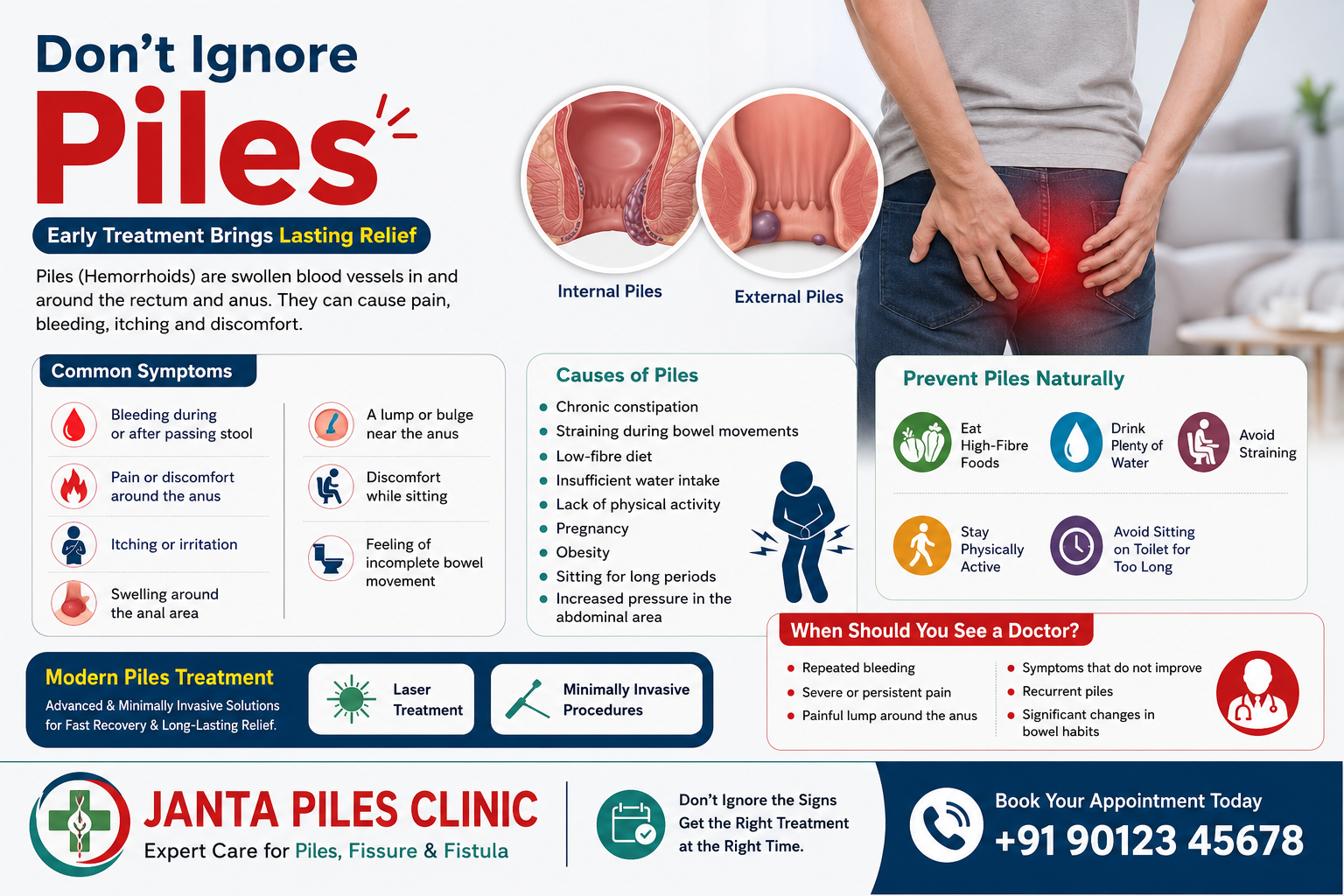
Piles develop when the blood vessels and supporting tissues in the anal or lower rectal area become swollen. Increased pressure in this region can contribute to the development of hemorrhoids.
Piles are generally divided into two main types:
1. Internal Piles
Internal piles develop inside the rectum. They may not always cause pain, but bright-red bleeding during or after bowel movements can occur.
2. External Piles
External piles develop under the skin around the anus. They may cause swelling, itching, irritation and pain, particularly when a blood clot develops inside the swollen vein.
Common Symptoms of Piles
The symptoms can vary depending on the type and severity of piles. Common signs include:
- Bleeding during or after passing stool
- Pain or discomfort around the anus
- Itching or irritation
- Swelling around the anal area
- A lump or bulge near the anus
- Discomfort while sitting
- Feeling of incomplete bowel movement
If you experience repeated rectal bleeding, it is important to consult a qualified doctor rather than assuming that it is always caused by piles.
What Causes Piles?
Several factors can increase the risk of developing piles. These may include:
- Chronic constipation
- Straining during bowel movements
- Sitting on the toilet for long periods
- Low-fibre diet
- Insufficient water intake
- Lack of physical activity
- Frequent diarrhoea
- Pregnancy
- Increased pressure in the abdominal area
- Obesity
Poor bowel habits can put additional pressure on the blood vessels and tissues around the rectum.
How Can Piles Be Prevented?
Simple lifestyle and dietary changes may help reduce the risk of piles and prevent symptoms from getting worse.
Eat More Fibre
Include fibre-rich foods such as fruits, vegetables, whole grains and other high-fibre foods in your diet. Fibre can help make stools softer and easier to pass.
Drink Enough Water
Adequate fluid intake can support normal bowel movements and help reduce constipation.
Avoid Excessive Straining
Try not to force or strain while passing stool. Avoid spending unnecessarily long periods sitting on the toilet.
Stay Physically Active
Regular physical activity can support healthy digestion and bowel movements.
Modern Piles Treatment
Treatment depends on the type, severity and individual condition of the patient.
For mild symptoms, doctors may initially recommend dietary changes, improved bowel habits and other conservative measures.
When symptoms are persistent or piles have progressed, a doctor may recommend a suitable medical or minimally invasive treatment.
Modern treatment approaches may include procedures such as laser-based treatment and other minimally invasive techniques, depending on the patient’s diagnosis.
The right treatment should always be decided after a proper examination by a qualified medical professional.
When Should You See a Doctor?
You should seek medical evaluation if you experience:
- Repeated bleeding
- Severe or persistent pain
- A painful lump around the anus
- Symptoms that do not improve
- Recurrent piles
- Significant changes in bowel habits
Rectal bleeding should not automatically be attributed to piles because other conditions can also cause bleeding.
Get the Right Treatment at the Right Time
Piles can be uncomfortable, but you don’t have to ignore the symptoms or live with recurring discomfort. Early medical evaluation can help identify the underlying problem and determine the most appropriate treatment.
At Janta Piles Clinic, patients can seek professional evaluation and guidance for conditions such as piles, fissure and fistula. A proper diagnosis is the first step toward choosing an appropriate treatment plan.
Don’t ignore persistent pain, bleeding or discomfort. Consult a qualified doctor and take the right step toward better anorectal health.